Gems of Sri Lanka
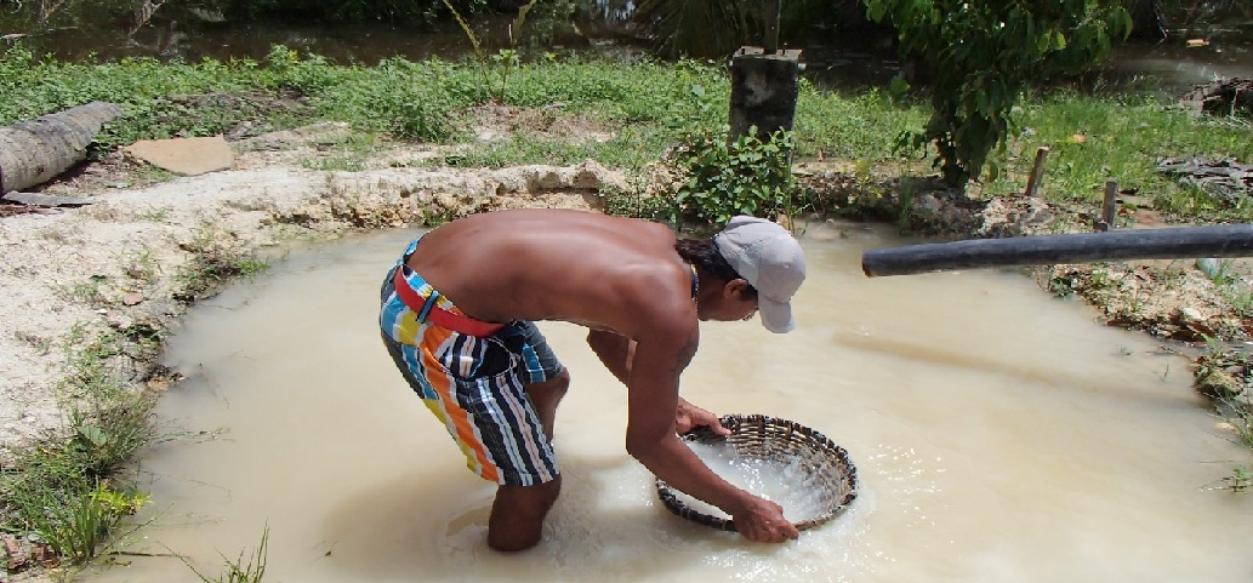
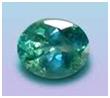
The gems of Sri Lanka are woven in to the history of the country. King Solomon is reported to have had gems brought from this island to win the hearts of beautiful Queens. From time immemorial Sri Lanka has had a sparkling reputation for highly treasured gems. Nature in her bounty has chosen the bosom of Sri Lanka to enshrine some of her rarest treasures. Blue Sapphires, Cat's Eyes, Alexandrites, Rubies, Star stones found embedded in layer of gravel and sand, in river beds, marshes, fields or accumulated at the foot of hills have made Sri Lanka the renowned island for gems. The Gem industry in the country has a very long and colorful history. Sri Lanka was affectionately known as Ratna Dweepa, which means Gem Island. The name is a reflection of its natural wealth. Marko Polo in 1292 wrote “I want you to understand that the island of Ceylon is, for its size, the finest island in the world, and from its streams comes rubies, sapphires, topazes, amethyst and garnet”. Some of the rarest precious stones in the world are found in abundance in the reach earth under our feet and the hills above us, here in Sri Lanka. Among the Several world famous gems Sri Lanka’s blue sapphire Weighing 466 carats, the largest known sapphire in the world was also discovered here. Other famous gems include the Blue giant of the Orient, Weighing nearly 500 carats and the bluebell of Asia, which weighs in at 400 carats. The renowned Sri Lankan Star sapphire, called the star of India due to an oversight, is on permanent display at the Museum of Natural History in New York. Throughout history Sri Lanka’s gems and jewels have adorned the crowns of many a royal family. A 105 carat cat’s eye discovered in a paddy field in Sri Lanka, gained fame among the royalty of Britain and was successively admired by Edward VII, George V, Edward VIII and Queen Elizabeth.
Sapphire
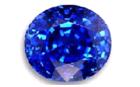
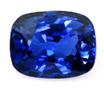
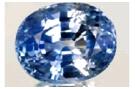
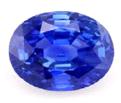
The Ceylon Blue Sapphire is known for its beauty, being one of the few sapphires in the world that can be sold as a completely natural stone without heat treatment. Ceylon sapphires also come in beautiful hues including pink, yellow, orange, green, purple and lavender. Sapphires that show a star-like light effect are called star sapphires. Most fine sapphire on the market today comes from Sri Lanka, which produces a wide range of beautiful blues from delicate sky blue colours to rich saturated hues. The most valuable sapphires have a medium intense, vivid blue colour. The best sapphires hold the brightness of their colour under all different types of lighting. The cost of natural sapphires varies depending on their color, clarity, size, cut, and overall quality – as well as their geographic origin. Blue sapphires are evaluated based upon the purity of their primary hue or color. Purple, violet and green are the most common secondary hues found in blue sapphires. Violet and purple can contribute to the overall beauty of the color, while green is considered to be distinctly negative.
Ruby
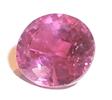
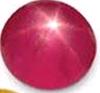
Ruby occurs in medium to dark tones of red and violet-red to brownish-red. Important factor in the value of a ruby is its colour. The top quality Rubies being as red as you can imagine. Besides colour, the other factors that influence the value of a ruby are clarity, cut, and size. Rubies that are perfectly transparent, with no tiny flaws, are more valuable than those with inclusions, which are visible to the eye. Cut can make a big difference in how attractive and lively a ruby appears to the eye. The Ruby sometimes displays a three-ray, six-point star. The star is most visible when illuminated with a single light source. The value of star rubies are influenced by the intensity and attractiveness of the colour and the strength and sharpness of the star. Ruby may exhibit a range of secondary hues. Orange, purple, violet and pink are possible. The finest ruby is best described as being a vivid medium-dark toned red. Secondary hues add an additional complication. Pink, orange, and purple are the normal secondary hues in ruby. Of the three, purple is preferred because, firstly, the purple reinforces the red making it appear richer. Secondly, purple occupies a position on the color wheel halfway between red and blue.
Alexandrite
Alexandrite is a variety of chrysoberyl, which ideally shows a distinct colour change from green in fluorescent light or daylight to red in incandescent light. The alexandrite variety displays a color change (alexandrite effect) dependent upon the nature of ambient lighting. This color shift is independent of any change of hue with viewing direction through the crystal. Both these different properties are frequently referred to as "color change", however. Alexandrite results from small scale replacement of aluminium by chromium ions in the crystal structure, which causes intense absorption of light over a narrow range of wavelengths in the yellow region of the spectrum. Alexandrite from the Ural Mountains of Russia is green by daylight and red by incandescent light. Other varieties of alexandrite may be yellowish or pink in daylight and a columbine or raspberry red by incandescent light.
Star Stones
Star stones of the corundum family are either star sapphires or rubies. When light falls on these stones, a star effect is visible. Sri Lanka is the best known source for star sapphires and star rubies. Star sapphires range in colour from grey to bluish-grey and from medium blue to medium dark blue. The very slightly purplish medium dark blue is the best colour grade for star sapphires. Star rubies range from light pink-red to purple-red through deep purple-red. The intense red star rubies are extremely rare. A good quality star stone should have a high degree of transparency and a well defined star with no weak or missing rays. It should be reasonably clean and in the face-up position, no distracting inclusions or cracks should be seen. There should be no excess weight at the bottom of the stone.
Cat's eye
Cat's eye is a gem variety of chrysoberyl. A very good cat’s eye, apart from being of ideal colour, should have a high degree of transparency and a well-defined unbroken ray. The most highly prized colours of Cat’s eye are greenish-yellow and brownish-yellow. Rare specimens also exhibit change of colour.
Amethysts
Amethysts are a variety of quartz, silicon dioxide, which appears to be dark purple in transparent light. Amethyst occurs in primary hues from a light pinkish violet to a deep purple. Amethyst may exhibit one or both secondary hues, red and blue. The ideal grade is called "Deep Siberian" and has a primary purple hue of around 75–80%, 15–20% blue and (depending on the light source) red secondary hues.
Citrine
Citrine is a transparent variety of quartz, silicon dioxide, occurring in yellow to red-orange to orange-brown. The name is derived from citron, which is French for lemon. Citrine is a variety of quartz that ranges in color from very pale yellow, to deep burnt-orange. It is not particularly rare, therefore it is possible to find very large natural pieces of citrine that are affordable. Citrine is also one of the easier gemstones to cut, which makes it possible to find interesting citrine gemstones that have been given unusual cuts.
Aquamarine
Aquamarine is a blue to greenish-blue or bluish-green variety of beryl. Almost all aquamarine is heat-treated to enhance its blue colour. Irradiation is done with neutron, gamma rays or with x-rays. Colour change is permanent and is an accepted practice. Most aquamarine peices are of a very pale light blue and have a few inclusions (other minerals inside the stone which are considered impurities and reduce the gemstone’s clarity and sparkle). It is possible to find very large (over 10 carats) aquamarines. The step-cut is the most popular because it accentuates the colour. As it is often found in large, flawless, even-colored crystals, it is frequently used in pendants and rings. Given a piece of rough crystal with a certain colour intensity, the larger stones cut from it will exhibit deeper colour. Aquamarine is the blue, or perhaps more correctly, blue-green or aqua variety of the mineral beryl.
Garnet
Garnets are a group of gemstones occurring in every colour but blue. One of earth's most common minerals, though only a small portion is considered gem quality. Since the earliest times garnets have been carried as amulets against accidents in travel. Asiatic peoples and even Southwest Indians used them as bullets, believing that their rich, glowing colour might cause more deadly wounds. Garnets usually faceted. Sometimes carved into intaglios. The properties that make garnet a wonderful gemstone are its very high luster (ability to reflect light almost like mirror) and range of very strong colors. Red garnets are not especially rare so quality peices can be had quite affordably.
Tourmaline
Tourmaline is a group of minerals comprised of a complex boron-aluminum silicate with one or more of - magnesium, sodium, lithium, iron, potassium or other metals. It appears in light from dark red to purple as well as brownish variations of these hues - light to dark green, yellowish-green, greenish-yellow, brownish-orange. It also grows bi-coloured. Tourmaline is a very special family of gemstones: it is one of the only gemstones in the world that occurs naturally in every color, sometimes even containing two colors in one stone. Ancient Egyptians believed that the tourmaline passed through a rainbow on its way up through earth, and thus was blessed with all the colors.
Spinel
A magnesium aluminum oxide which occurs in all colours, ruby-red being the most popular. Most colours are greyed out. Gahno-spinel is a dark blue or greenish-blue spinel with high zinc content. Spinel occurs in almost every color, and forms gems of all colors. It is not a well known gem, although good specimens can attain very high prices. Bright red Spinel, known as Ruby Spinel, is the most valuable Spinel. In the past, there was no distinction between true Ruby and Ruby Spinel, as they look very similar and are found together in the same localities. (Nowadays, distinctions can be easily made through hardness and x-ray tests.) Many famous old "Rubies" were found to actually be Spinel. The famous Black Prince's Ruby that forms the centerpiece of the royal crown of Great Britain was discovered to be a Spinel rather then a Ruby.
Topaz
Topaz is a fluosilicate of aluminum, occurring in transparent yellow, yellow-brown, orange-brown, light to almost medium red, very light to light blue, very light green and violet colours. Topaz has been an important gem for thousands of years. There are references to topaz in ancient texts from various cultures.One of the characteristics of topaz that makes it desirable as a gemstone is that it is relatively hard or resistant to scratches. It is however, brittle and if not set properly can split if hit in a certain way.. Topaz comes in a variety of colors: blue, yellow, brown, pink and colorless, with blue being the most widely known and commonly used in jewelry.
Moonstones
Moonstones are usually colourless to white, semi-transparent to translucent, and characterised by a glowing light effect known as adularescence, the visibility of which is confined to a restricted angle of view. The most valuable of the feldspar gems. Moonstone is a type of feldspar. It is unique because of the rainbow colors that can be seen playing inside it. The most valuable moonstone has strong blue or rainbow colors glowing inside it. It is free of inclusions (impurities or internal cracks), perfeclty polished and large (over 5 carats).
Zircon
Zircon is a zirconium silicate, occurring in colourless, light blue, brownish-orange, yellow, yellowish-green, brownish-green, dark red or light red-violet. Blue is the most valuable. This stone is usually heat-treated. Zircon is a well-known mineral that makes an important gemstone of of many colors. Its brilliant luster and fire, combined with good hardness, make it a desirable gem. Natural Zircon with good color and transparency is uncommon; most Zircon crystals are opaque and brownish. However, most Zircon gemstones, especially the blue and white forms, are enhanced by heat treatment.
Peridot
Peridot is a silicate of magnesium and iron, occurring in yellowish-green, green, greenish-yellow, brownish-green and brown (all transparent). Peridot is the gem variety of olivine. It is not exceptionally rare, but large peices with intense color can command high prices. Peridot’s most striking feature is its particular, bright shade of green. Inclusions are also common in peridot, making clear peices more valuable.